Calgary
 Ottawa
 Edmonton
 Regina
 Halifax
 Saskatoon
 Hamilton
 Toronto GTA
 Kingston
 Vancouver
 Kitchener
 London
 Windsor
 Montreal
 Winnipeg






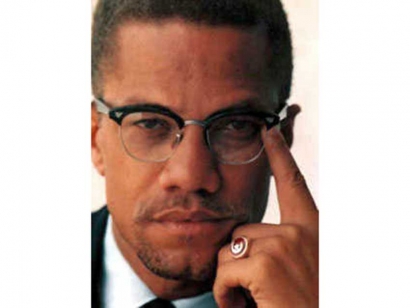
Black History Month is celebrated annually in February in the United States and Canada. Its origins go back as far as 1926 with the establishment of “Negro History Week” in the United States during the second week of February. This week was chosen because both President Abraham Lincoln (1809-1865) and former slave-turned-human rights activist Frederick Douglass (1818-1895) were born during this week.
The first celebration of Black History Month occurred in 1970 at Kent State University and in 1976, under the presidency of Republican Gerald Ford, the Unites States government officially recognized February as Black History Month. In Canada, in 1995, Black Liberal MP Jean Augustine, who was the first Black woman to become a member of a federal cabinet, brought a motion forward to the House of Commons for the month’s recognition, and in 2008, Black Conservative Senator Donald Oliver, who was the first Black man appointed to the Senate, moved for the Senate to do the same; both motions were unanimously approved.
In honour of Black History Month, the Muslim Link’s Chelby Marie Daigle asked local Muslims -- both those who are Black and those who are not -- what Black History Month means to them.
The recent Supreme Court of Canada judgment in the NS case – deciding whether a woman who brought charges of childhood sexual abuse against male relatives could wear her niqab while providing testimony – sparked much discussion that reflected the ongoing tension of a Canadian society where misperceptions and mistrust of anything associated with Islam remain a constant.
Part of those tensions reflect an Islamophobic lens that, as University Of Ottawa professor Natasha Bakht points out, positions the niqab as a symbol that is “experienced by non-wearers as a form of confrontation or criticism against national ways of living and dressing.”

My reaction to the Quebec 2012 election results was, in a nutshell, quite satisfied, especially given what the polls and the media, including English outlets, were crowing.
Despite a tired Parti Liberal du Quebec government (whose vote was split with the Coalition Avenir Quebec), the defection of some disenchanted PLQ supporters to the Parti Quebecois, and the polarizing effect of the federal Tories whose policies are widely unpopular in Quebec, the final result was a slim minority mandate to the PQ. Just four seats and less than one per cent of the popular vote (31.94 percent vs. 31.2 per cent) separated them from the Liberals.
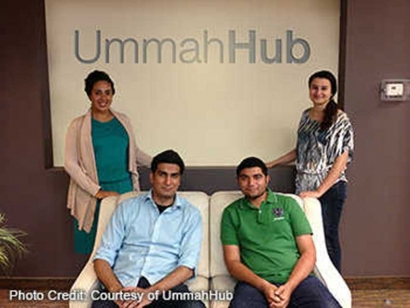
UmmahHub and Anfiq are two new Ottawa-based crowd-funding platforms aimed at providing more sophisticated fundraising options for Muslim communities in order to address one of the most common problems facing the community: fundraising fatigue.
We have all at some point used something that wasn't ours, perhaps the pen from a colleague's desk, or a sibling's bike. This happens either with or without the rightful owner's permission. And we all know how the drama unfolds when it's the second case.
The general community as a whole, and quite frankly the Muslim community in particular, suffer from a similar type of “borrowing” malady. I'm talking of course about the unauthorized use of media to pass off as our own.
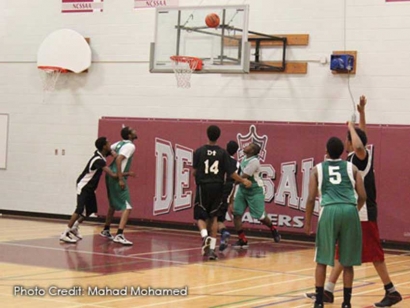
Ramadan is a month where we strive to get closer to Allah by sacrificing that which is normally permissible for us. The most physically strenuous sacrifice is of food and drink during daylight hours, which in Ottawa this year will be for roughly 17 hours daily. But despite the common perception that exercise and physical exertion are to be avoided during Ramadan, one need not put away the weights and hide the running shoes.
Hamza Abdullah of the Arizona Cardinals, for example, has throughout his career managed to fast during Ramadan while playing professional football. Mr. Abdullah believes the key is preparation.
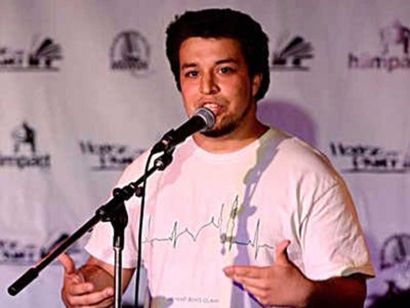
“I HATED English, which makes the whole poetry thing a surprise even for myself,” shared Ali Awada about his unlikely success as a rising star in Ottawa's Spoken Word scene. Ali, 23, grew up in Detroit, the son of Lebanese parents who decided to move to Canada when he was 10. Ali broke onto the scene at Capital Slam in December 2012. He placed second in his first ever competition, and then won first place the next week. Ali took the stage name ”˜Ali Islam' and “the rest is history.” He has performed at Muslim community events from high school Eid Dinners to the Muslim Association of Canada (MAC) Eid Festival, and recently opened for YouTube sensation FouseyTube in Montreal during his Canadian tour. You will find Ali performing solo or in the hip hop group House of Halaal with Jae “Deen” Asare.
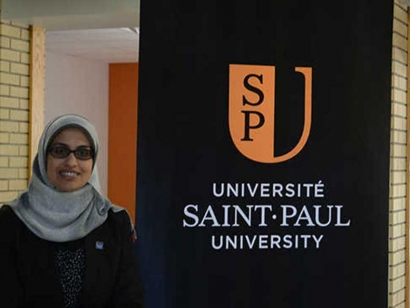
A recent conversation with Dr. Aliaa Dakroury left my neurons firing in all directions, trying to forge the synaptic connections that would allow my brain to process the contributions of this exuberant dynamo of a woman.
It was twilight, when we long to draw the curtains and lull ourselves into an evening peace but two minutes into the conversation my heart was pumping with the same adrenalin that pulsed through her veins as she proclaimed the need for Muslim women in Canada to be visible and audible ambassadors of their faith.
Dr. Dakroury cannot be said to be tentative in her opinions. To her credit, she has passionately held convictions on the myriad roles that Muslim women should play in North America, or anywhere, for that matter.
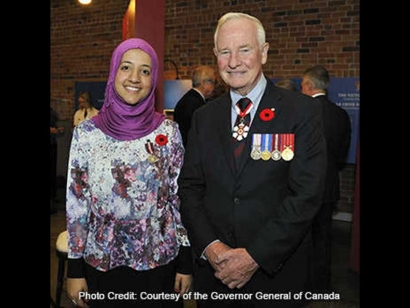
You may not know her name but you have probably seen her.
In 2011, Rasha Al-Katta's smiling face was visible across the city as part of the United Way's campaign to raise awareness about the organization. Volunteers like Ms. Al-Katta were asked to pose for the posters instead of models.
“I thought it would be fun. I didn't even know that it would be splattered everywhere. I thought it would just be in the newspaper but then people started texting me ”˜Rasha we saw your poster in Rideau or at Place D'Orleans!'. It was pretty exciting,” Ms. Al-Katta shared.
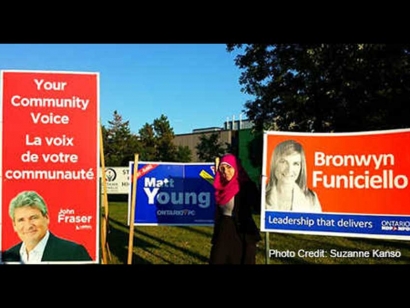
Being asked to cover the Ottawa-South provincial by-election for Muslim Link was a wakeup call and reality check for me as a Lebanese Muslim Canadian. Because I live in the riding, I had to think about how provincial politics affect my life and the lives of my friends and family.
But what I often hear when the topic comes up is: “I hate politics!” or “ Please let's not talk about politics”.
Automatically, the door is shut upon this topic and the conversation shifts to what seems more important ”“ the latest goings on Facebook.
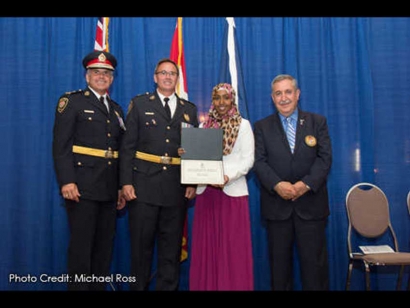
For the second year in a row, a Muslim woman has been awarded a special scholarship from the Ottawa Police Service in order to pursue a career in policing.
Urge Ibrahim was presented with the Thomas G. Flanagan S.C. Scholarship by Chief Charles Bordeleau at the Ottawa Police Service's annual Community/Police Awards on June 18.
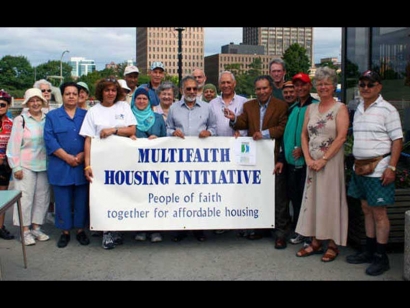
When Dr. Farook Tareen first came to Ottawa over forty years ago, the Muslim community was small. He joined the Ottawa Muslim Association and maintained the relationship until his death on Thursday, Dec. 20, 2012. He worked tirelessly to both develop and nurture the Muslim community and to build bridges with the broader community of Ottawa. The following is compiled with excerpts from emails sent to Dr. Tareen's family by those who knew and loved him.
Wire service ”“ n. A news-gathering organization that distributes syndicated copy electronically, as by teletype or the Internet, usually to subscribers.
Also known as a wire agency.
About a decade ago, Hadeel Al-Shalchi, 32, was writing articles about Ottawa's Muslim community in these very pages. She also hosted a weekly show on Carleton University's student radio station, CKCU, and was a regular guest on CBC Radio, commenting on the latest developments in her homeland.
Obviously, journalism was in her blood, though at the time she was pursuing an engineering degree because her father thought it was a more reliable choice.
Perhaps. But thankfully Ms. Al-Shalchi decided to follow her dreams. After obtaining a Master in Journalism from Carleton University, the then 25-year-old Ms. Al-Shalchi made her way to the Middle East, where her family is originally from, to break into journalism on familiar soil. That decision would change her life and bring her to the front lines of the Arab Spring, including the latest violent uprising in Syria.
Ms. Al-Shalchi, who is now covering the Middle East for the wire agency Reuters, was in Ottawa recently and shared her experiences with a packed room of journalism students, family, friends and members of the wider public. Here are some of her reflections on covering the historic Arab Spring uprisings:
With a background in psychology and a PhD in neuroscience, management didn't initially figure among Nashwa Irfan's career goals.
“I would have never gone into management if it were not for my father's encouragement,” says Dr. Irfan.
Her father the late Dr. Muhammad Irfan, a professor in physics at St. John's University was certainly right about Dr. Irfan's talent as a manager. This year she received not one, but two prestigious awards for her work as Health Canada's Associate Director of its Marketed Pharmaceuticals and Medical Devices Bureau.
"I am only one, but still I am one. I cannot do everything, but still I can do something; And because I cannot do everything I will not refuse to do the something that I can do." - Helen Keller
In preparation for this article I asked Fatma Maged to email me her favorite saying and she replied with the quote above by Helen Keller. Later, as I sat down in an interview with Fatma, I soon realized why this quote is so closely related to her own personal biography.
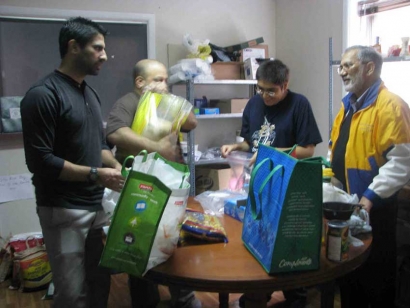
I recall my first day as a volunteer at the Ottawa Sadaqa Food Bank. I didn't really know what to expect, so I was glad it was training day which also gave me an opportunity to meet my fellow team members. Once our training was complete we were officially on our own. We divided ourselves into two groups. Two of us would staff the office and serve the clients, while the other two would take to the pantry to stock shelves and make food packages. Initially I was in the latter group.
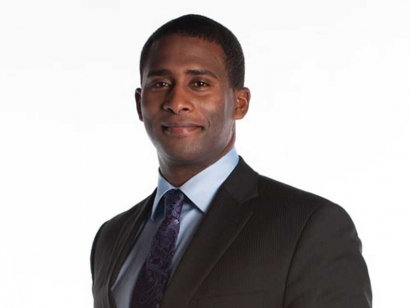
Having recently recognized that people are hungry for local news, CBC is turning its attention to local communities after having left community news in the backseat for so long due to budget cuts. As a result, changes are occurring within the CBC Ottawa newsroom. One of the recent changes is Adrian Harewood.
The news out of Egypt is coming fast and furious. One of the latest reports came from Human Rights Watch (HRW), which condemned what it sees as the excessive use of force by Egyptian security forces in the dispersal of pro-Morsy protesters.
“The police's persistent record of excessive use of force, leading to dozens of deaths this month, and the density of the sit-ins mean that hundreds of lives could be lost if the sit-in is forcibly dispersed,” according to HRW's Middle East Director Nadim Houry, “To avoid another bloodbath, Egypt's civilian rulers need to ensure the ongoing right of protesters to assemble peacefully, and seek alternatives to a forcible dispersal of the crowds,” he said.
I have been called many things: an optimist, strong, patient, tough. The truth is, what I really feel I am, is blessed. And I share this with you to remind you how very blessed you are, too -- even when it might not seem like it.
Whenever afflicted by some calamity or test, one may choose to reflect upon the story of the passing away of Ibrahim, the son of our beloved Prophet Muhammad, may peace and blessings be upon him. Anas bin Malik, may Allah be pleased with him, narrated: "We went with Allah's Apostle to the blacksmith, Abu Saif, and he was the husband of the wet-nurse of Ibrahim. Allah's Apostle, peace and blessings be upon him, took Ibrahim and kissed him and smelled him and later we entered Abu Saif's house and at that time Ibrahim was taking his last breaths, and the eyes of Allah's Apostle started shedding tears. Abdur Rahman bin Auf said: 'O Allah's Apostle, even you are weeping!' The Prophet, peace and blessings be upon him, replied: 'Oh Ibn Auf, this is mercy'. Then he wept more and said, 'The eyes are shedding tears and the heart is grieved, and we will not say except what pleases our Lord. Oh Ibrahim! Indeed we are grieved by your separation'." (Sahih Al-Bukhari)
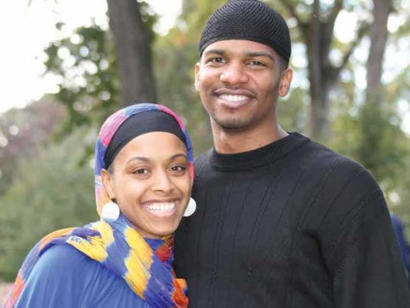
Many people will spend months and sometimes even years preparing for a wedding that will last a few hours, not to mention the tens of thousands of dollars invested as well. But how many people actually prepare for marriage itself, which could last a lifetime, by ensuring they have selected the most suitable partner, based on the criteria set out by the Quran and Sunnah (tradition of the Prophet, may peace and blessings be upon him) and the advice of experts in the field of forming healthy relationships that lead to successful marriages?
Sign up for our free Muslim Link Snapshot and get our events listing and latest articles sent to your inbox weekly.
 Online Event