Calgary
 Ottawa
 Edmonton
 Regina
 Halifax
 Saskatoon
 Hamilton
 Toronto GTA
 Kingston
 Vancouver
 Kitchener
 London
 Windsor
 Montreal
 Winnipeg






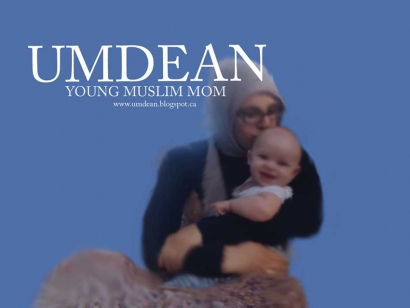
Young people are often regarded as irresponsible, immature agents of chaos. Full of passion and wild ideas, people in their late teens or early twenties are often seen by society as a group of people who are generally unequipped to make any big life decisions.
As young adults, we feel like we have the green light to behave this way as it is what society seems to expect from us. Growing up in the West, we are taught that it’s okay to delay any major life decision and to “have fun while we still can.”
This is why it comes as quite a shock when I tell people that I was married at 18 and had my first child at 20. At first, some people tend to assume that I am the victim of the “oppressed Muslim woman forced into marriage young” stereotype.
We live in a society that holds negative views regarding labour and birth. Through mass media, we are taught that it is a process filled with a sense of urgency, fear and pain. But it really doesn't have to be that way.
Before I became a mother, the word “labour” gave me so many mixed feelings. Anticipation, curiosity, fear and nervousness were all things I experienced in the months leading up to the big day.
One thing that reassured me was remembering that giving birth is something all women were built to do, by God's design. Yes, labor is painful but it's amazing how a positive outlook can truly help us manage.
When first finding out that they are pregnant, most expectant mothers head straight for their family doctor who then refers them to an obstetrician without a second thought, but did you know that there is another type of caregiver?
Midwives have been around pretty much ever since women have been going into labour.
Modern midwives are certified professionals who have at least a bachelor’s degree, completed nursing and midwifery training and who have also passed exams in order to obtain a license to practice.
As a Muslim woman, I found that there were several benefits to having a midwife:
Becoming a parent is one of those things that you just don't know until you know. We all grow up hearing how challenging parenthood really is, but we just don't realize it until it actually happens to us.
No amount of reading or pep talks can really prepare you for the challenge that is life with a baby, but that doesn't mean you can't try. At 20 years old, one thing that comforted me the most when I learned I was going to be a mother was the fact that my older sister also had her first child at that age.
On Monday, March 25th, a group of people gathered around a muddy road, making their way to an Algonquin heritage site called Victoria Island, in Ottawa. The smell of tobacco and smoke filled the air, and loud drumming and chanting could be heard from a distance. There was excitement in the air.
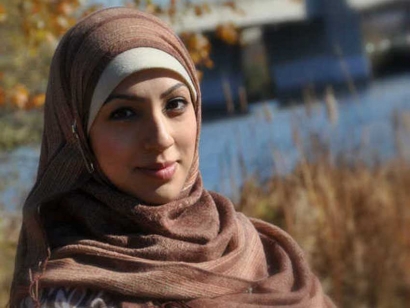
Berak Hussain discovered her passion for counselling back when she was a student at Gloucester High School.
The Ottawa Muslim Community agrees fully with Prime Minister Stephen Harper that there should be only one law for all Canadians. We have chosen Canada as our homeland and as good Muslims it is our duty to abide by the laws of this beautiful, peaceful country.
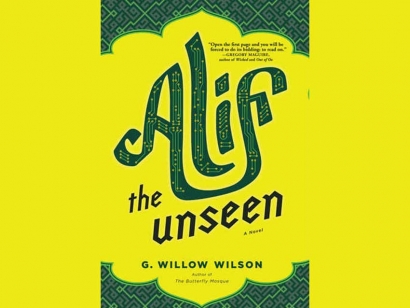
**SPOILER ALERT**
When a gunman opened fire at the victory celebration for Quebec's PQ Leader Pauline Marois, there was no reference to his religion or birth country, and certainly no grand statement about whether or not his actions reflect “our values.” Amidst the tragedy, one can only assume that such omissions from the public record mean the man was not a Muslim and was born on this continent.
Those rooting for “reasonable accommodation” and “secularization” were no doubt disappointed that this was not another hook on which to hang their Islamophobic hat. Indeed, any misstep by any Muslim fuels the political and media obsession with an ancient, tribalistic notion that “our” society is being taken over by “their” values; a fear-based campaign that drives much of the hatred directed against Islam.
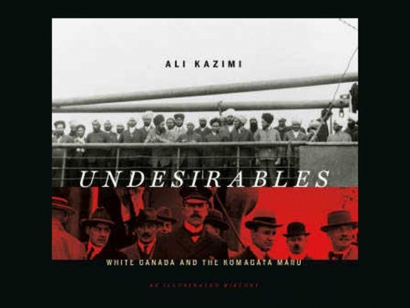
As Parliament passes sweeping, repressive immigration legislation, Toronto filmmaker Ali Kazimi's timely book, Undesirables: White Canada and the Komagata Maru, an Illustrated History, is a welcome and necessary contribution that should be required reading not only for Jason Kenney and his cohorts, but also those good-hearted folks who claim the new law violates Canada's mythic “humanitarian traditions.”
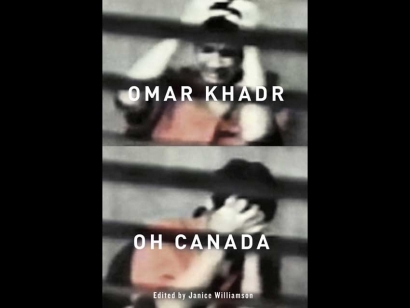
If timing is everything, can it also be ironic?
Just as author and academic Janice Williamson launches an anthology of essays detailing Canada's failure to uphold the rights of one of its citizens, another “Oh Canada” is quickly garnering much attention.
Canadian media have already publicized the Massachusetts Museum of Contemporary Art's new exhibition which aims to portray Canada's artistic landscape, as seen through the eyes of its contemporary artists, authors, and cultural purveyors.
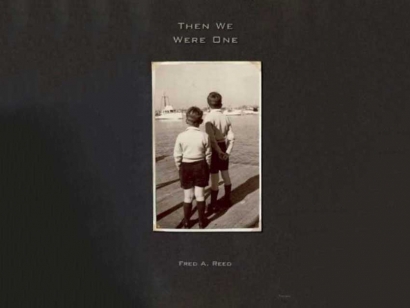
I met Fred Reed at a CAIR-CAN fundraising in Montreal few years ago. I didn't know at that time that he would one day be one of the translators of my memoir Hope and Despair. Later on, I read one of his numerous books on the Middle-East and I discovered with delight and curiosity a glimpse of the man who stood behind this tall and shy personality. An American War Resister? International journalist? A translator who chose Canada, and more particularly Quebec, as a land of adoption?
Then, I read his latest book Then We Were One, a memoir he wrote that was published by Talonbooks in November 2011. After I finished reading this book I realized how little I knew about the life of this fascinating Canadian author.
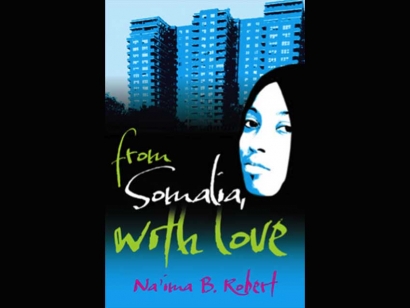
Na'ima B. Robert is an extraordinary writer, masha Allah (praise be to Allah). She is good at making her stories interesting, like I-can't-stop-reading-now sort of interesting. One of the books she has written is called, From Somalia, With Love. I enjoyed that book very much.
The book is based on a girl named Safia, whose father comes back from Somalia. She calls him Abo. It is the Somali way of saying “father”. If you never knew your father because he was in another country, you would be happy he came home, right? I would. But in Safia's point of view, when her father came home, it ruined everything.
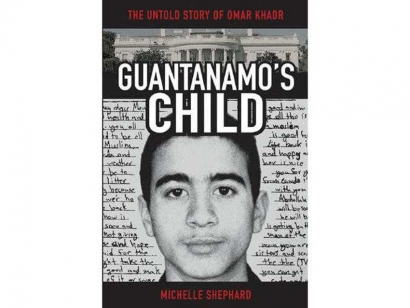
The subtitle of Michelle Shephard's book, Guantanamo's Child: The Untold Story of Omar Khadr, seems a little misleading. How can this be an untold story when news about the Khadr family has been splashed across Canadian and international media?
But the subtitle is accurate. Though the Khadrs have received much news coverage, especially in Canada, not many know the family's full story.
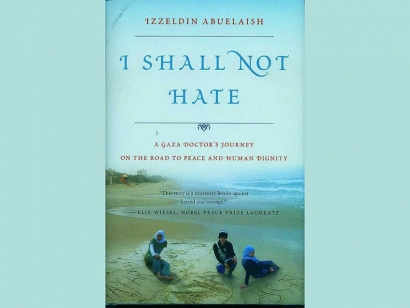
I had looked forward to meeting Dr. Izzeldin Abuelaish, the Palestinian doctor whose book I Shall Not Hate tells his moving story. But when I met him in Toronto he rebuked me, but in a manner that increased my admiration for his character.
Dr. Abuelaish was born in Jabalia refugee camp in the Gaza Strip and that would normally doom him to life-long misery and despair. His book chronicles his sufferings and humiliation ”“ and that of Palestinians ”“ from an ongoing, harsh occupation. But Dr. Abuelaish struggled day and night to become an internationally acclaimed physician and a crusader for a just peace. He made many Israeli friends.
The holiest month of the Islamic year, Ramadan, began last Friday, 20 July. This Ramadan, many Muslims are looking at a new dimension of the month: our impact on the earth. This is particularly important as we learn more about the effects of climate change, dwindling resources and, most importantly, decreasing access to fresh water around the world, which is a growing concern in many Muslim communities and countries.
As if racial and religious profiling wasn't enough of a problem for Muslims, now with the release of the federal government's new counter-terrorism strategy which lists environmental groups as threats, Muslim environmentalists have it tough.
The newly published document from Public Safety Canada lists environmentalists under “issue-based domestic extremists” who could pose a threat to Canadians.
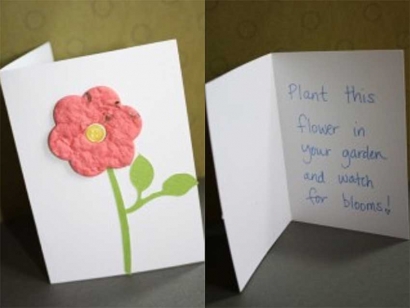
Last year, we discussed how to make attractive wrappers for our Eid gifts using recycled and reusable materials.
This year, we're looking at Eid cards. We've all tried, and many have succeeded, in making hand crafted Eid cards for our loved ones. Here's a neat ah”¦ recipe for making this year's Eid cards a bit more interesting.
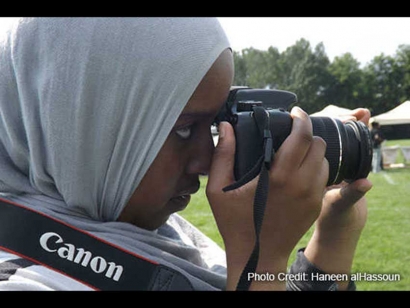
This summer I was blessed to get an eight-week summer job placement with Sadaqa Food Bank as the media/events coordinator, and it reminded me of how important it was to help other people. With a half-finished undergraduate degree in human rights, I have realized that theorizing about poverty will not solve anything.
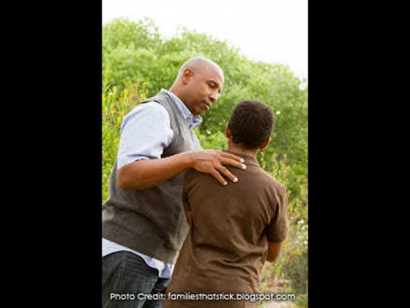
For around a decade, educators, psychiatrists and social scientists have been raising the alarm that something is going wrong for boys. Poorly served by an education system that privileges female ways of learning, and no longer having access to other sources of guidance and self-development in community settings, boys are falling through the cracks. Boys' scores in school are statistically lower than those of girls, and every year, fewer boys than girls make it to university or graduate. Those who work with boys are finding that they are increasingly disconnected: isolated and unplugged from their social contexts, they retreat into virtual worlds of computer and video games - and in some cases, into negative social groupings such as gangs.
Sign up for our free Muslim Link Snapshot and get our events listing and latest articles sent to your inbox weekly.
 Online Event