Calgary
 Ottawa
 Edmonton
 Regina
 Halifax
 Saskatoon
 Hamilton
 Toronto GTA
 Kingston
 Vancouver
 Kitchener
 London
 Windsor
 Montreal
 Winnipeg





 Mongrel Media
Jan
'The Voice of Hind Rajab' Comes to Canada: Interview with Filmmaker Kaouther Ben Hania
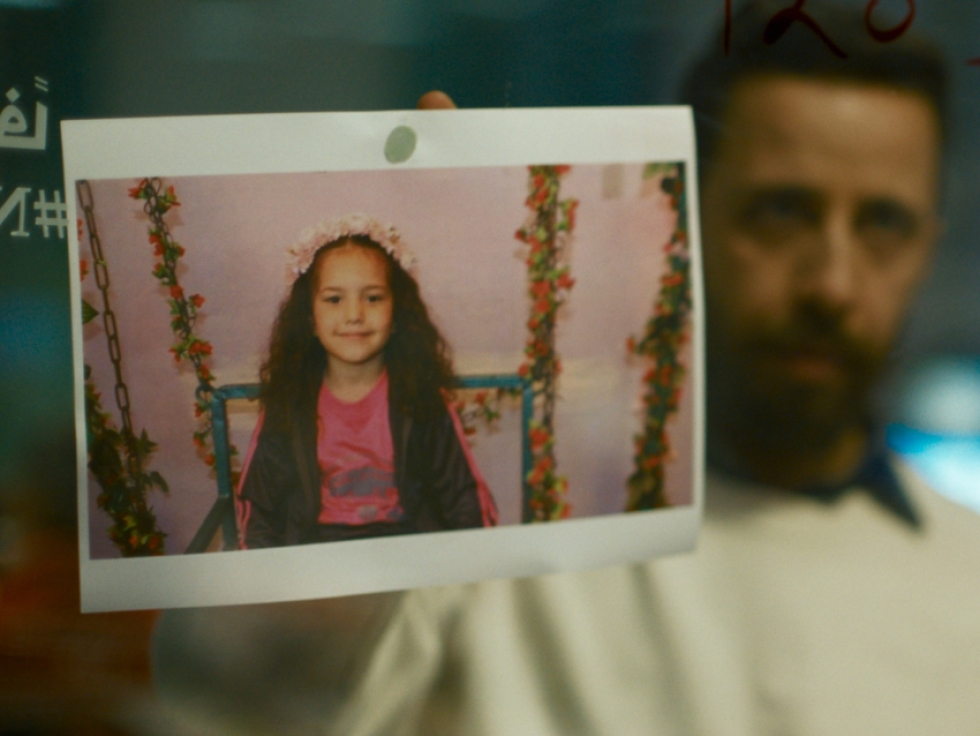
Written by Mongrel MediaJanuary 29, 2024. Red Crescent volunteers receive an emergency call. A 6-year-old girl is trapped in a car under fire in Gaza, pleading for rescue. While trying to keep her on the line, they do everything they can to get an ambulance to her. Her name was Hind Rajab.
THE VOICE OF HIND RAJAB has been nominated for an Academy Award for Best International Feature.
The film "The Voice of Hind Rajab" is now playing across Canada starting from January 23.
To purchase tickets in the Greater Toronto Area ON, click here
To purchase tickets in Ottawa ON, click here
To purchase tickets in Montreal QC, click here
To purchase tickets in Vancouver BC, click here
To purchase tickets in Edmonton AB, click here
To purchase tickets in Calgary AB, click here
To purchase tickets in Hamilton ON, click here
To purchase tickets in Waterloo ON, click here
To purchase tickets in Winnipeg MB, click here
To purchase tickets in Halifax NS, click here
To purchase tickets in Victoria BC, click here
To purchase tickets in Sudbury ON, click here
To purchase tickets in Saskatoon SK, click here
Watch the Trailer on Youtube below:
The following is an interview with the filmmaker Kaouther Ben Hania about the project.
Mongrel Media: Hind Rajab’s final call is one of the most harrowing and emblematic stories to emerge from Gaza, a moment that was meticulously investigated by outlets like The Washington Post, Sky News, and Forensic Architecture. It resonated globally as both intimate tragedy and public indictment. At what point did you decide that this story needed to become a film?
I first came across a short audio clip of Hind Rajab calling for help. Her small voice breaking through chaos, asking simply not to be left alone.
The moment I heard it, something inside me shifted. I felt an overwhelming wave of helplessness and sorrow: not intellectual, but physical. As if the world tilted slightly off its axis.
Hind’s voice, in that moment, became something more than a child’s desperate plea. It felt like the very voice of Gaza itself, calling for help into a void, met with indifference, met with silence. It was a metaphor made painfully real: a cry for rescue that the world could hear, but to which no one seemed willing or able to respond.
I reached out to the Palestine Red Crescent Society to hear the full recording. It was over seventy minutes long, seventy minutes of waiting, of fear, of trying to hold on. It was one of the most difficult things I’ve ever listened to.
I then began speaking with Hind’s mother, and with the people who were on the other end of that call, the ones who tried, against impossible odds, to save her. We spoke for hours. From their words, and from the haunting presence of Hind’s voice itself, I began to build a story. A story rooted in truth, carried by memory, and shaped by the voices of those who were there.
Mongrel Media: Why did you feel compelled to tell this story through the medium of cinema?
Even with denied access to Gaza, some investigative journalism has emerged, as you mentioned. But I believe cinema offers something different. It doesn’t report, it
remembers. It doesn’t argue, it makes you feel.
What haunted me was not just the violence of what happened, but the silence that followed. That ’s not something a report can hold. That ’s something only cinema, in its stillness and intimacy, can attempt to contain.
So I turned to the only tool I have (cinema) not to explain or analyze, but to preserve a voice. To resist amnesia. To honor a moment the world should never forget. This story is also about our shared responsibility, about how systems fail Gazan children, and how the silence of the world is part of the violence.
Mongrel Media: This is a film rooted in a real and devastating loss: the death of a child whose voice was heard around the world. You’ve spoken about listening to the full audio recording and reaching out to those directly involved. But approaching such a sensitive and personal story inevitably raises questions of consent, trust, and representation. How did Hind Rajab’s family and particularly her mother Wessam respond to your desire to tell this tragic story through the medium of cinema? And in what ways did their support shape the process of creation?
After I heard the full recording from the Palestine Red Crescent Society, I knew instantly (in my body, not just my mind) that I had to make this film. But I also knew one thing with absolute clarity: if Hind’s mother said no, I would walk away. That conversation wasn’t a formality, it was the foundation. Without her consent, nothing would move forward. Rana, from the Red Crescent, was the one who put me in contact with her. Rana had been on the line with Hind for hours that day, and she and Hind’s mother had since developed a bond. They had made a promise to each other that when this horror ends, they would go together to visit Hind’s grave. That simple gesture spoke volumes to me about the kind of care and trust already surrounding Hind’s memory.
Hind’s mother is an extraordinary woman, graceful, intelligent, and profoundly kind. From the very first call, I was transparent. I told her: " This film will only happen if you want it to. The decision is yours ". She told me everything about Hind, her personality, her dreams, the way she laughed. I felt that, in sharing all this with me, she was trying to keep her daughter alive, to make sure that her memory didn’t vanish, or become just another news item. Hind’s mother spoke with her family about the film, and they all gave their full support and consent. Her voice, marked by quiet resilience, boundless love, and unspeakable pain, flows through every moment of the shaping of this film.
This film is not mine alone. It carries the weight of Hind’s mother trust, the memory of a child whose voice the world cannot afford to ignore, and the courage of those who tried to reach her: the Red Crescent team who stayed on the line, the medic, and the ambulance driver who were killed in the attempt. It holds the grace of those who have lost everything, yet still found the strength and generosity to open their hearts and share with me their mourning, their dignity, and their unwavering humanity.
Mongrel Media: While Hind’s voice remains the emotional heartbeat of the film, the narrative unfolds through the eyes of those who tried to save her: the Red Crescent team on the other end of the call . How did their testimonies shape the writing process? And how did you navigate the creative and ethical challenge of translating their lived experience into the language of cinema?
When I began speaking with the real Rana, Omar, Nisreen, and Mahdi I quickly realised that none of them had ever heard the recording of their own voices from that day. I had access to the full audio through the Palestine Red Crescent Society, but they hadn’t listened to it since it was archived. So when they spoke to me, they weren’t recounting what they said but they were recounting what they felt.
That distinction was incredibly important, both ethically and cinematically. Their testimonies weren’t factual transcripts but they were deeply personal, subjective accounts of fear, helplessness, confusion, and moral urgency. That gave me a unique layer to work with: while the recording serves as a factual backbone of the film, their memories allowed me to center their inner experiences.
The writing process, for me, was really about navigating between these two worlds: the archival and the emotional, the documented and the lived. Cinema gave me the language to hold both.
Mongrel Media: One of the most striking aspects of the film is the raw, unfiltered presence of the actors. There’s a palpable authenticity in their reactions. Is that because they were hearing Hind’s real voice during the shoot? And how did that shape their performances?
Yes, what you’re sensing is real. The actors weren’t just performing scripted lines. They were re-inhabiting a lived moment. During the shoot, each actor was repeating, almost word for word, what their real-life counterpart had once said to Hind. And in their earpieces, they were hearing Hind’s actual voice, taken from the original recording. All of the actors are Palestinian (as were most of the extras) and this film meant a great deal to them. They were not just interpreting a story; they were carrying something that touched them personally, historically, and politically. This wasn’t abstract. It was real, close, immediate.
It was emotionally overwhelming, not only for them, but for the entire crew. You could feel a kind of collective silence on set, a reverence. The usual boundaries between acting and witnessing seemed to dissolve.
Mongrel Media: Your work has long navigated the porous boundary between documentary and fiction: a tension that found a striking culmination in Four Daughters, with The Voice of Hind Rajab, you return to this liminal space, but in an even more radical and intimate form. How would you describe this film in terms of genre? Is it dramatization grounded in fact, or a documentary cloaked in narrative?
This question touches the very heart of my practice. I’ve never been fully comfortable with fixed genre definitions, especially when dealing with stories that carry deep emotional and political weight. The Voice of Hind Rajab is, yes, a dramatized film. It is scripted, constructed, and performed. But it ’s also anchored in an undeniable, painful truth and more than that, it ’s built around a real voice, that of Hind herself, captured in the final moments of her life.
For The Voice of Hind Rajab I had to find a cinematic form where the narration is not about invention, but about a transmission of memory, of grief, of failure. In that sense, I didn’t feel I was inventing anything. I felt I was receiving something (something urgent, something sacred) and my role was to shape a cinematic space capable of holding that voice with dignity.
So I wouldn’t say this film “blurs” the lines between genres. I would say it intensifies them, it stretches the limits of what dramatization can contain and what documentary can protect. All of these were ways of resisting narrative conventions and trying to get closer to a different kind of truth: not just what happened, but what it felt like, what it meant.