Calgary
 Ottawa
 Edmonton
 Regina
 Halifax
 Saskatoon
 Hamilton
 Toronto GTA
 Kingston
 Vancouver
 Kitchener
 London
 Windsor
 Montreal
 Winnipeg






May
Home Exterior Maintenance Guide for GTA Newcomer Families
Written by Ahmad AkhtarBuying your first home in the Greater Toronto Area is a milestone many newcomer families work years to reach. The mortgage closes, the keys land in your hand, and within six months a different reality sets in: a Canadian house demands constant outside care that nobody discusses at the closing table. Snow, ice, leaves, pollen, freeze-thaw cycles, and salt spray attack every surface twelve months a year. Skip the maintenance for one season and you trade a 200 dollar cleaning visit for a 2,000 dollar repair bill.
Below you will find what families across the GTA actually pay for exterior maintenance in 2026, how to spot a contractor worth keeping, the warning signs that should send you running, and which jobs you can safely handle yourself. The numbers come from current contractor rates across Ottawa, Toronto, Mississauga, Brampton, Hamilton, Kitchener, and surrounding communities. The advice comes from watching what separates families who spend 800 dollars a year on home upkeep from families who spend 8,000 dollars after letting things slide.
What home exterior maintenance costs across the GTA in 2026
Pricing varies by city, property size, height of the building, and how long the work has been postponed. Below are the real ranges families are paying this spring, broken down by service.
Eavestrough cleaning: 130 to 350 dollars per visit
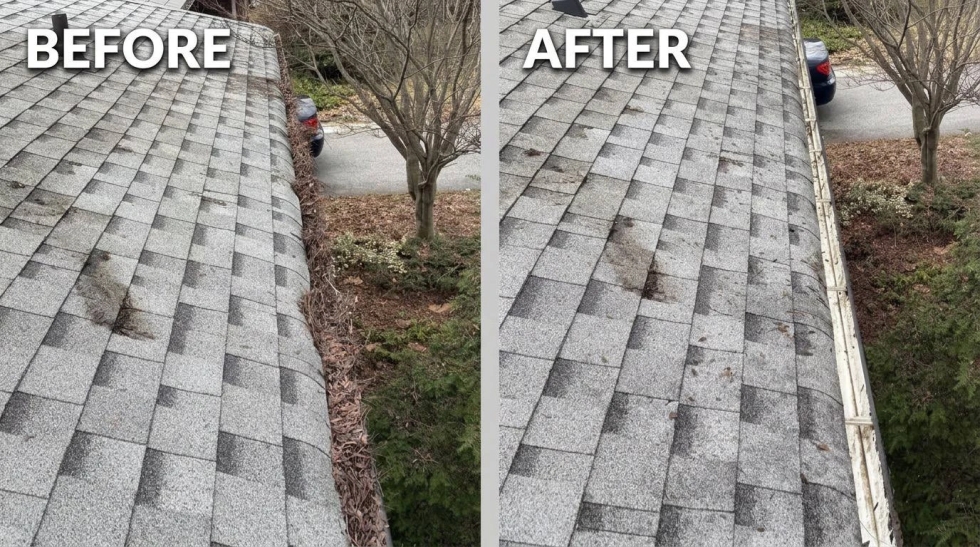
A bungalow with 40 to 60 feet of gutter sits at 130 to 200 dollars. A two-storey detached home with 80 to 120 feet of gutter runs 200 to 300 dollars. Townhomes typically fall between 150 and 250 dollars. Larger homes with 150 plus feet start at 350 dollars and climb based on roof complexity. Most properties need this twice a year: once in late spring after pollen and seed pods drop, and once in late fall after the leaves come down.
Skipping the fall cleaning is the single biggest mistake we see across the GTA. Clogged gutters in November create ice dams in January, and ice dams force water under your shingles. The shingle repair alone runs 800 to 2,500 dollars depending on how far the leak spread.
Power washing: 150 dollars per hour
The standard rate for a professional crew across the GTA is 150 dollars per hour with the clock starting when the equipment is running, not when the truck pulls into the driveway. A full house exterior including siding, soffit, fascia, and gutters takes two to three hours for a typical two-storey home. Adding a driveway or paver patio adds another one to two hours depending on square footage and how long the surface has been collecting moss.
Some companies charge flat rates instead, usually 400 to 800 dollars for a full house exterior. Either model works as long as the price is set before the crew arrives.
Window cleaning: 150 to 400 dollars
Pricing depends on the number of windows, the number of storeys, and whether you want interior plus exterior or only exterior. A bungalow runs 150 to 250 dollars for full coverage. A two-storey home with 20 to 30 windows costs 250 to 400 dollars. Post-construction window cleaning, where heavy paint splatter and adhesive residue need scraping, costs roughly double the standard rate.
Gutter guard installation: 7 to 12 dollars per linear foot
Quality micro-mesh guards run 7 to 12 dollars per linear foot installed. A 150-foot home costs 1,050 to 1,800 dollars upfront. The guards drop your cleaning frequency from twice a year to once every two or three years. Over six years a home without guards spends roughly 3,000 dollars on cleanings. The same home with guards spends 1,500 dollars on installation plus 500 dollars on one mid-cycle cleaning. The guards pay for themselves before year five and prevent ice dams in winter as a bonus.
Eavestrough repair: 130 to 400 dollars
Joint sealing, bracket reattachment, and short section replacement fall in this range. The number climbs fast if the work has been delayed. A cracked silicone joint left for two seasons leaks water onto the fascia behind it, and rotted fascia replacement runs 800 to 2,500 dollars depending on the run length. Catching the seam crack at 150 dollars saves you the four-figure repair eighteen months later.
How newcomer families can find reliable contractors in Toronto and the GTA
The hardest part of settling into a new country is figuring out who to trust. The Canadian contractor industry has its own conventions, and they are not always obvious to families arriving from abroad. Below are the five signals that separate a real operator from someone who will not be around when something goes wrong.
1. Provincial insurance and certification
Any crew climbing on a roof or working at height in Ontario must hold Working at Heights certification from the Ministry of Labour. The certification is mandatory for anyone working above three metres, which means anyone touching your gutters, soffit, or second-storey siding. The crew also needs liability insurance with coverage starting at two million dollars, plus WSIB workplace safety coverage for their workers.
Ask for proof before anyone touches your property. A legitimate company emails you a certificate within minutes. Anyone who refuses, stalls, or tells you the documents are at the office tells you exactly what you need to know. Walk away.
If a contractor damages your property or a worker gets injured on your roof, the insurance covers the cost. Without insurance, the homeowner is liable. A single ladder fall on an uninsured job can wipe out years of savings.
2. Reviews that build over time, not all at once
For local trades, Google review history is the fastest way to separate real operators from short-lived companies. A business with twenty perfect reviews posted in the same week is far less reliable than a company with three hundred reviews accumulated across two or three years. Real customers leave reviews months after the work is done. Fake review pushes happen in concentrated bursts.
Look at the review timeline before the star rating. Sort by newest. If the company has been getting steady reviews every month for years, the operation is real. If reviews stopped suddenly six months ago and started again last week, something changed.
A Toronto cleaning company DT Cleaning is one example that fits the profile worth looking for: hundreds of Google reviews built over years, two-million-dollar liability coverage on file, and Working at Heights certification for every technician. The combination of insurance plus genuine review history is the baseline standard any GTA family should expect from a contractor before signing anything.
3. Clear pricing with no surprises
Trustworthy crews quote a flat rate or an hourly rate with the clock starting at the moment the work begins, not at the moment the truck pulls into the driveway. Setup time, hose connection, equipment staging, and surface inspection are not billed. The estimate matches the invoice. If a crew gives a verbal price and bumps the bill at the end without explanation, the visit you just booked should be the last one with that company.
Ask three specific questions before booking. First: is the price flat or hourly? Second: when does the clock start? Third: what triggers extra charges? A company that answers all three clearly is a company you can budget around. A company that gets vague is a company that will surprise you on the invoice.
4. Job-site photos and a written report
Professional crews document their work. Photos before and after the visit, a written note about anything they spotted that needs follow-up, and clear communication about what was and was not done. The photos serve two purposes. First, they prove the work happened the way the crew said it did. Second, they let you compare year over year to see how your home is aging.
Crews that refuse to share photos are hiding something or have nothing to show. A modern smartphone camera takes 30 seconds to document a job. Any crew that cannot manage that is either careless or planning to get away with shortcuts.
5. Same crew, not subcontractors
Companies that send the same trained team to every job take more pride in the work and answer for it directly. Companies that subcontract to whoever is available that day cannot guarantee quality, training, or accountability. Ask before booking whether the crew that the company trains will be doing the work, or whether the work gets handed off to a third party.
Subcontracting is not always bad, but it changes the dynamic. If something goes wrong on a subcontracted job, the company that booked you is one phone call away from blaming the sub, and the sub is one phone call away from disappearing.
What to schedule across a typical Canadian year
Exterior maintenance follows the seasons. Below is a realistic calendar for a GTA family living in a detached or semi-detached home.
March: Book spring eavestrough cleaning and window washing for April or May. Off-season pricing may still apply, and crews have open availability before the rush starts.
April to May: Spring eavestrough cleaning after pollen and seed pods drop. Inspect gutters for winter damage including cracked joints, sagging runs, separated seams, and disconnected downspouts. Spring is the right time to catch a small repair before summer rains expose it.
June: Power wash siding, walkways, eavestrough exterior, and the patio before summer entertaining season. Algae and winter grime are at their worst before the first heavy summer wash.
July to August: Spot-check downspouts after summer storms. A blocked downspout backs water against the foundation and cracks the basement seal over years.
September to October: Fall eavestrough cleaning after leaves drop. Fall cleaning matters more than spring because clogged gutters in November lead to ice dams in January.
November: Final inspection. Make sure downspouts are clear and extensions are in place before the first hard freeze.
December to February: Watch for ice dams during thaw cycles. If ice forms along the gutter line and water backs up under shingles, a professional crew can clear the dam safely. Trying to chip ice off the roof yourself causes more damage than the dam.
When to do it yourself and when to hire a professional
A single-storey bungalow with ground-level gutters is a job most homeowners can handle with a stable ladder, work gloves, a garden hose, and a couple of free hours on a Saturday. The cost is zero plus the price of the gloves. The risk is low. Cleaning your own bungalow gutters twice a year keeps you connected to your property and helps you spot problems early.
A two-storey house with a pitched roof is a different conversation. Ladder falls are among the leading causes of home injury in Ontario every year, and most happen during routine maintenance. A professional cleaning visit at 200 to 350 dollars is a fraction of what a hospital visit costs, plus the lost wages from missing work for weeks. Trained crews bring stabilizers, fall-arrest gear, and the experience to know which roof sections are safe to walk on. Most homeowners do not own that equipment and have no reason to develop the experience.
Power washing follows the same logic. A consumer pressure washer from a hardware store works fine on a ground-level patio or driveway. The pressure is manageable, the angle is straight down, and the worst that happens is a streaky patch you wash again. Aiming high pressure water at second-floor siding, vinyl trim, and window frames is a different exercise. Done at the wrong pressure or wrong angle, water gets behind the siding and feeds mold growth inside the wall cavity.
The mold appears six months later as a stain on the interior wall, by which point the repair runs into the thousands.
The general rule: if your feet leave the ground for more than a few rungs of a ladder, a professional is cheaper than the alternative.
Building a relationship with one trusted contractor
The families across the GTA who spend the least over time on home exterior maintenance are the ones who find one good company and stay with them. A contractor who knows your property by the second visit will spot small problems before they grow. A contractor you call once never builds that knowledge. The second-time visit catches the bracket that started loosening over winter. The third-time visit catches the early seam separation. The fourth-time visit catches the downspout extension that shifted during a storm.
Take the time during your first year in the home to find a crew that meets the five criteria above. Hire them once for a small job and watch how they work. Did they show up on time? Did they price the work the way they said they would? Did they leave the property clean? Did they send the report afterward? If the answer to all four is yes, keep their number. Recommend them to neighbours. Good contractor relationships in Toronto, Mississauga, Ottawa, Hamilton, and every other GTA community grow exactly this way.
The newcomer families who treat home maintenance as a one-time problem to solve every few years end up paying the most. The ones who treat it as a long-term relationship with a trusted local crew end up paying the least and protecting their largest investment along the way.
Home maintenance is not exciting. None of it is. But every dollar spent on prevention saves five dollars on the repair you would have faced by ignoring the warning signs your property was already showing you.
This article was produced exclusively for Muslim Link and should not be copied without prior permission from the site. For permission, please write to info@muslimlink.ca.
This article was produced exclusively for Muslim Link as part of a paid advertising package. For more information on how to advertise through Muslim Link and support the running of Canada's Online Hub go here.